Fannie Mae Today
While our role providing liquidity and stability to the U.S. residential mortgage market and promoting affordable access to mortgage credit has remained constant, we’ve strengthened our business significantly since entering conservatorship. This makes us more resilient and better prepared to serve homebuyers and renters in all market conditions.
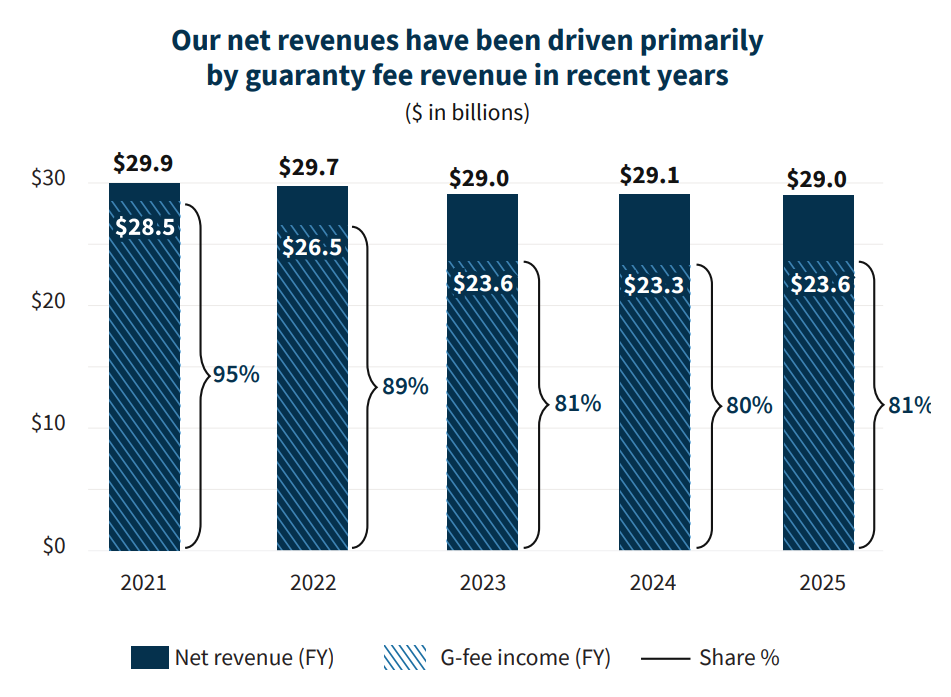
Guaranty fees are the primary source of our revenues
We provide a guaranty on the mortgage-backed securities (MBS) that we issue. If a borrower fails to make a payment on a mortgage loan that is included in a Fannie Mae MBS, we guarantee payment of principal and interest to the MBS investor. In exchange, we receive a guaranty fee. In 2025, guaranty fees constituted more than 80% of our net revenues.
We’ve demonstrated the strength of our business model
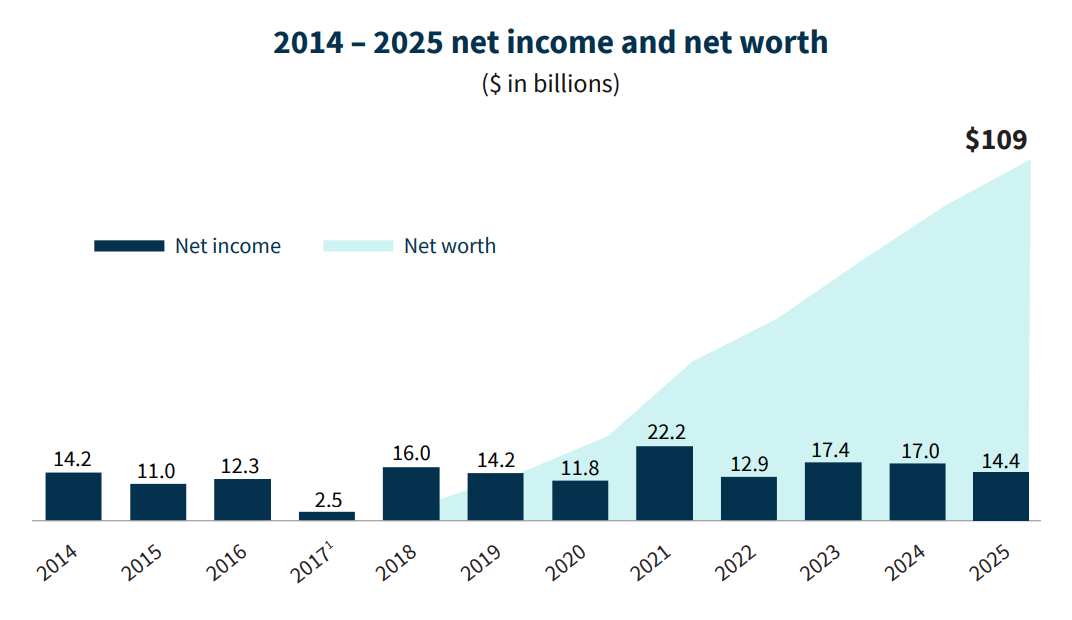
We’ve achieved 14 straight years of annual profitability, reflecting effective long-term risk management and focus on mission. And since the beginning of 2020, we’ve increased our net worth by more than $95 billion, resulting in $109 billion of net worth as of the end of 2025.
We’re there when we’re needed most
We provide financing every day to help strengthen the housing market, which contributes to the economy, employment, and a better quality of life across America. Our role is even more critical in tough moments for the economy. For example, during the COVID-19 pandemic, many other financial institutions held back their mortgage purchases, which would have prevented many people from securing a mortgage or refinancing. Fannie Mae stepped in and provided additional support, increasing our mortgage purchases to ensure a strong housing market and help the economy.
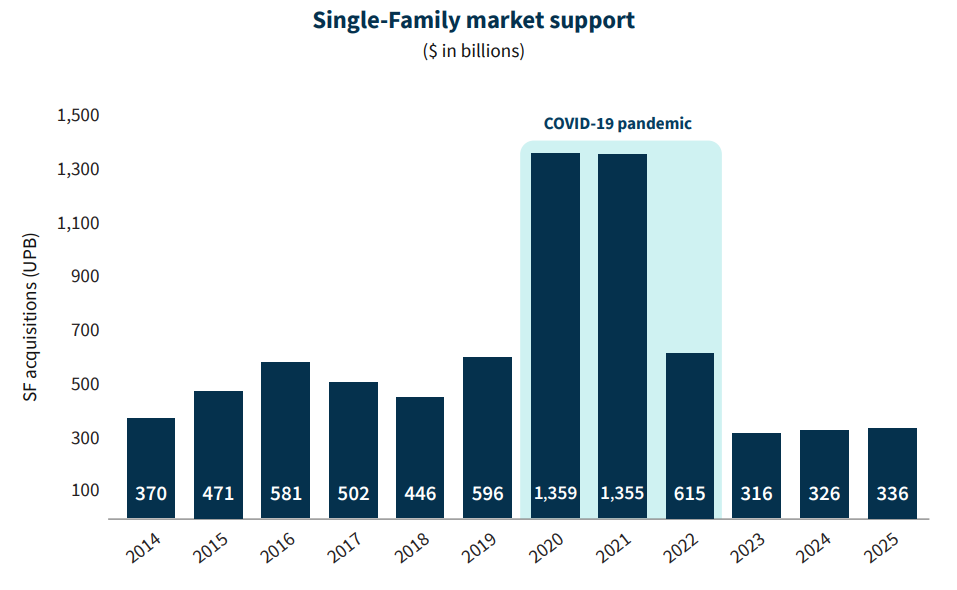
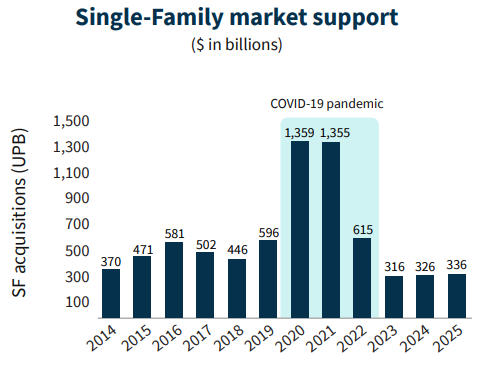
At the same time, we developed innovative and flexible tools for mortgage companies to help renters and homeowners impacted by the pandemic. For homeowners facing financial hardships, we offered the option to suspend or delay mortgage payments up to 18 months. We helped more than 1.4 million homeowners under this plan.
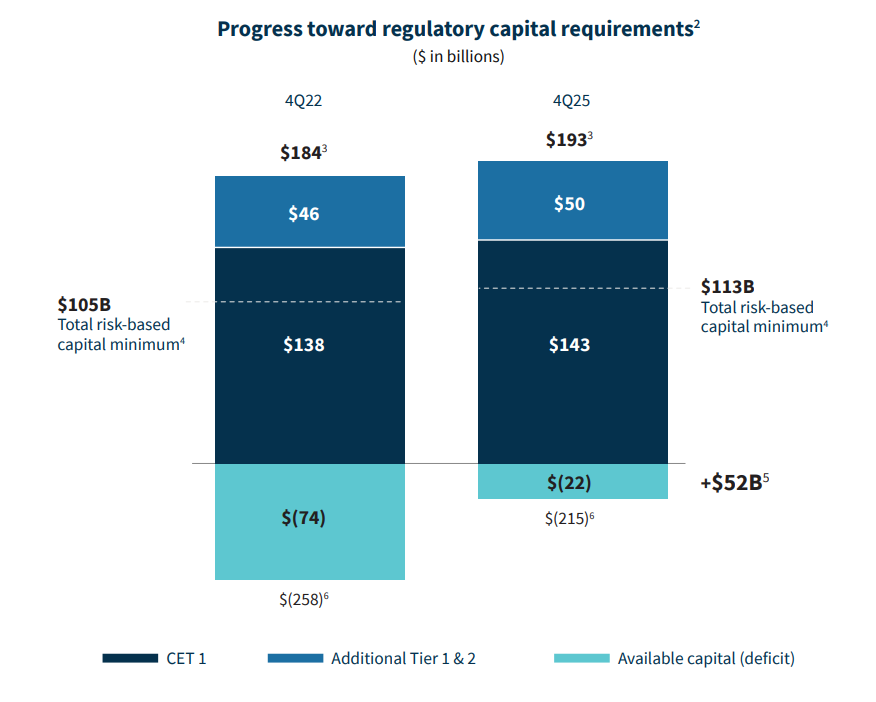
To help ensure we are able to meet the housing market’s needs in times of stress, our regulator has established rigorous bank-like capital requirements. We are building our capital to meet those requirements.
Additionally, since entering conservatorship, we’ve focused on improving the resilience and credit quality of the book of mortgages we guarantee. The Dodd-Frank Act Stress Test (known as DFAST), conducted annually to assess our ability to withstand difficult economic conditions, is a key indicator of our ability to withstand financial shocks. Over the past few years, our DFAST results have shown limited or no pre-tax losses during hypothetical economic downturns even worse than the 2008 financial crisis. This underscores the strength of our business and its ability to serve as a source of stability in the market today and in the future.
12017 GAAP net income includes a $9.9B provision for federal income taxes resulting from the remeasurement of Fannie Mae’s deferred tax assets due to the corporate tax reduction in the Tax Cuts and Jobs Act.
2The company began reporting its capital position under the enterprise regulatory capital framework beginning with the quarterly period ended December 31, 2022. The enterprise regulatory capital framework has a transition period for compliance, as described in the company's 2025 Form 10-K. While the company is in conservatorship, the company is not required to comply with the minimum capital or buffer requirements.
3Represents total adjusted risk-based capital requirements including buffers.
4Minimum capital requirement does not include buffers.
5Represents the improvement in our available capital deficit for purposes of our risk-based adjusted total capital requirement from 4Q 2022 to 4Q 2025.
6Represents the shortfall to our risk-based adjusted total capital requirement, including buffers.
All charts reflect data as of or through the end of 2025 unless otherwise noted. For more information, please refer to the materials posted to our Quarterly and Annual Results page.
Page last revised: 11/18/26
